
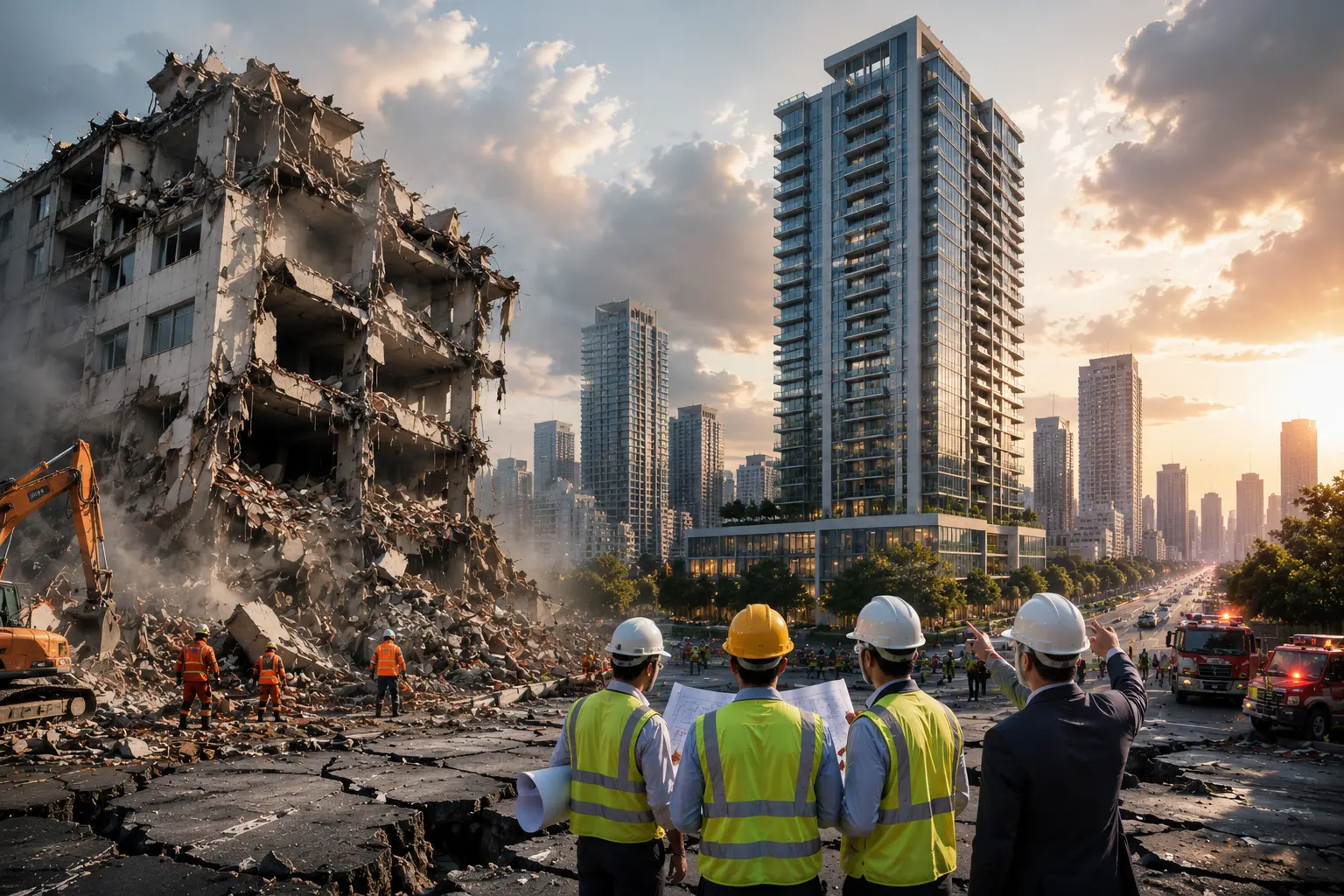
Earthquake-Resistant Buildings: Venezuela Engineering Lessons
Earthquake-Resistant Buildings are becoming one of the most important topics in modern architecture, structural engineering, and construction. Following the recent earthquakes reported in Venezuela, architects and engineers around the world are once again discussing how modern buildings can be designed to survive powerful seismic events.
While earthquakes cannot be prevented, their impact on buildings and infrastructure can be significantly reduced through proper planning, engineering calculations, building codes, and construction techniques. Every major earthquake provides valuable lessons that help improve future design standards and building safety.
For architects, engineers, and construction professionals, understanding seismic design principles is no longer optional. It has become an essential part of creating safe, durable, and resilient buildings capable of protecting human life and minimizing economic losses.
Why Earthquake-Resistant Buildings Matter
Earthquakes generate powerful forces that travel through the ground and into building foundations. Structures that are not properly engineered may experience severe cracking, foundation failure, structural collapse, or complete destruction.
Modern earthquake-resistant buildings are designed to absorb, redistribute, and dissipate these forces. Instead of fighting against the movement of the earth, modern structures are engineered to move safely with it.
- Improved occupant safety
- Reduced structural damage
- Lower repair and reconstruction costs
- Better long-term building performance
- Increased resilience during disasters
Key Lessons from the Venezuela Earthquake
The recent seismic activity in Venezuela highlights several important lessons for architects and engineers. Building performance during earthquakes depends not only on the intensity of the event but also on the quality of design, construction materials, and compliance with building codes.
Structures that follow modern engineering standards generally perform much better than older buildings designed before seismic regulations were introduced.
The Venezuela earthquake also demonstrates the importance of regular building inspections, structural upgrades, and retrofitting older structures to meet current safety requirements.
Engineering Strategies Used in Earthquake-Resistant Buildings
Base Isolation Systems
Base isolation technology separates a building from ground movement using specialized bearings and flexible supports. This system helps reduce the amount of seismic energy transferred into the structure.
Shear Walls
Shear walls provide lateral stability and help buildings resist horizontal earthquake forces. They are commonly used in high-rise towers, residential buildings, and commercial projects.
Reinforced Concrete Structures
Modern reinforced concrete combines compressive strength with steel reinforcement, allowing structures to withstand both tension and compression during seismic events.
Energy Dissipation Systems
Advanced skyscrapers often use dampers and energy dissipation devices that absorb vibrations and reduce building movement during earthquakes.
The Role of Architects in Seismic Design
Architectural design decisions have a major influence on building performance. Simple, symmetrical building forms generally perform better during earthquakes than highly irregular structures.
Architects can improve seismic performance by:
- Creating balanced floor plans
- Avoiding unnecessary structural irregularities
- Reducing weak structural zones
- Working closely with structural engineers
- Selecting appropriate building materials
Digital Tools for Modern Structural Design
Today's architecture industry relies heavily on digital design technologies. Professional 3D modeling software helps architects visualize complex structures, improve coordination, and identify potential issues before construction begins.
Many professionals improve their workflow using specialized SketchUp extensions and design tools available through Nice Tower Pro.
AI Technology and Structural Engineering
Artificial Intelligence is rapidly changing architectural workflows. Modern AI systems can accelerate conceptual design, automate repetitive tasks, and generate design alternatives faster than traditional methods.
Platforms such as SUAPP AI allow architects and designers to transform images into editable 3D models, helping professionals save time and improve productivity.
As AI technology continues to evolve, its role in architecture, structural engineering, and disaster-resilient design will become increasingly important.
Conclusion
The Venezuela earthquake serves as a powerful reminder that resilient design saves lives. Earthquake-resistant buildings are the result of careful planning, advanced engineering, quality materials, and strict compliance with modern building standards.
By combining architectural expertise, structural engineering knowledge, digital workflows, and emerging technologies such as AI, the construction industry can create safer and more resilient buildings for future generations.